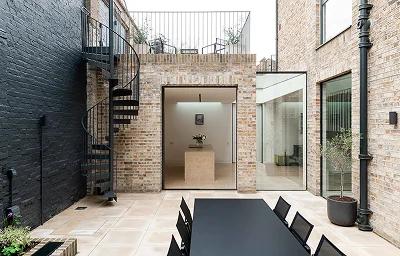
Planning permission home extension London searches usually start when a project feels simple on the surface, and then quickly becomes less clear. Homeowners hear about permitted development, assume it will apply, and only later discover that borough-specific conditions, design choices, or property constraints change the picture.
The most efficient route is to understand the planning context before the design gathers momentum. In London, this can save considerable time and reduce the risk of developing a scheme that looks promising but is difficult to approve.
Do All Extensions Need Planning Permission?
Not always. Some extensions can fall under permitted development London rules, provided they meet specific limits and conditions. However, that does not mean every house qualifies or that every extension idea can proceed without formal consent. Flats, many listed buildings, some properties in sensitive locations, and homes affected by restrictions may require a full application.
This is why planning permission for home extension London projects needs early review rather than assumption.
Key considerations include the following:
- Whether the property is a house or a flat
• Existing rights and prior alterations
• Conservation area or heritage context
• Size, height, and position of the extension
• Whether local restrictions affect permitted rights
Understanding London Extension Planning Rules
London extension planning rules are shaped by both national guidance and local authority interpretation. Scale, massing, materials, neighbour impact, overlooking, and daylight can all influence the success of an application. A scheme that technically fits a footprint allowance may still struggle if it appears overly dominant or poorly related to the existing building.
This is why a planning strategy should be tied closely to design quality.
Good planning work usually considers:
• How the extension sits within the site
• Its relationship to adjoining properties
• Whether the proposal respects the host building
• How clearly the drawings justify the design
The Role Of Permitted Development London Homeowners Often Overlook
Permitted development rights in London can be useful, but they are not a shortcut to weak design. Even where a formal planning application is not required, the extension still needs to work spatially, structurally, and aesthetically. In many high-value homes, the quality of the result matters more than simply choosing the least regulated route.
It is also worth noting that many homeowners pursue a lawful development certificate for added certainty, even where permitted development may apply.
Why The House Extension Application Process Matters
The house extension application process is not just administrative. The quality of the drawings, the clarity of the proposal, and the logic of the design all affect how smoothly the project progresses. Poorly resolved applications can trigger delays, requests for revision, or refusals that could have been avoided.
A stronger process usually includes:
• Early site and policy review
• Measured surveys and design testing
• Clear planning drawings for extension proposals
• Supporting documents where required
• A realistic timeline for determination and next steps
Why Planning Drawings For Extension Projects Need More Than Compliance
Planning drawings for extension applications do more than show size. They communicate intention. They explain how the extension relates to the existing house, how it affects the street or garden elevation, and why the design is appropriate.
In better projects, these drawings are part of the design process, not a technical afterthought. That often leads to a stronger scheme overall.
What Homeowners Can Do To Improve Their Chances
Planning success is rarely about finding a loophole. It is usually about producing a proposal that is measured, well-justified, and genuinely suited to the property. That requires early thinking, realistic scope control, and careful drawing work.
Homeowners usually benefit from:
• Testing options before committing to one scheme
• Understanding local planning expectations
• Aligning ambition with site constraints
• Working with an architect who can balance design and planning
Planning permission for home extension projects in London becomes far more manageable when the process is approached early and strategically. Whether the route is full consent or permitted development in London, the outcome depends on how well the design responds to the property, the planning context, and the practical realities of building. A good planning strategy does not just improve approval chances. It usually improves the architecture as well.
For homeowners preparing an extension in London, Found Associates helps shape proposals that combine planning awareness, refined design thinking, and clear technical preparation from the outset.
FAQs About Planning Permission For Home Extensions In London
- Do All Home Extensions Need Planning Permission In London?
No. Some may fall under permitted development rights in London, but many still require review or a formal application. - What Are London Extension Planning Rules Based On?
They are shaped by national guidance, local authority policy, site context, and the design impact of the proposal. - What Is The House Extension Application Process?
It typically includes surveys, design development, planning drawings, submission, and local authority review. - Why Are Planning Drawings For Extension Projects So Important?
Because they help explain the scale, design logic, and relationship of the proposal to the existing property.
5. Is Permitted Development Always The Best Option?
Not necessarily. The right route depends on the property, the design ambition, and the level of certainty needed.