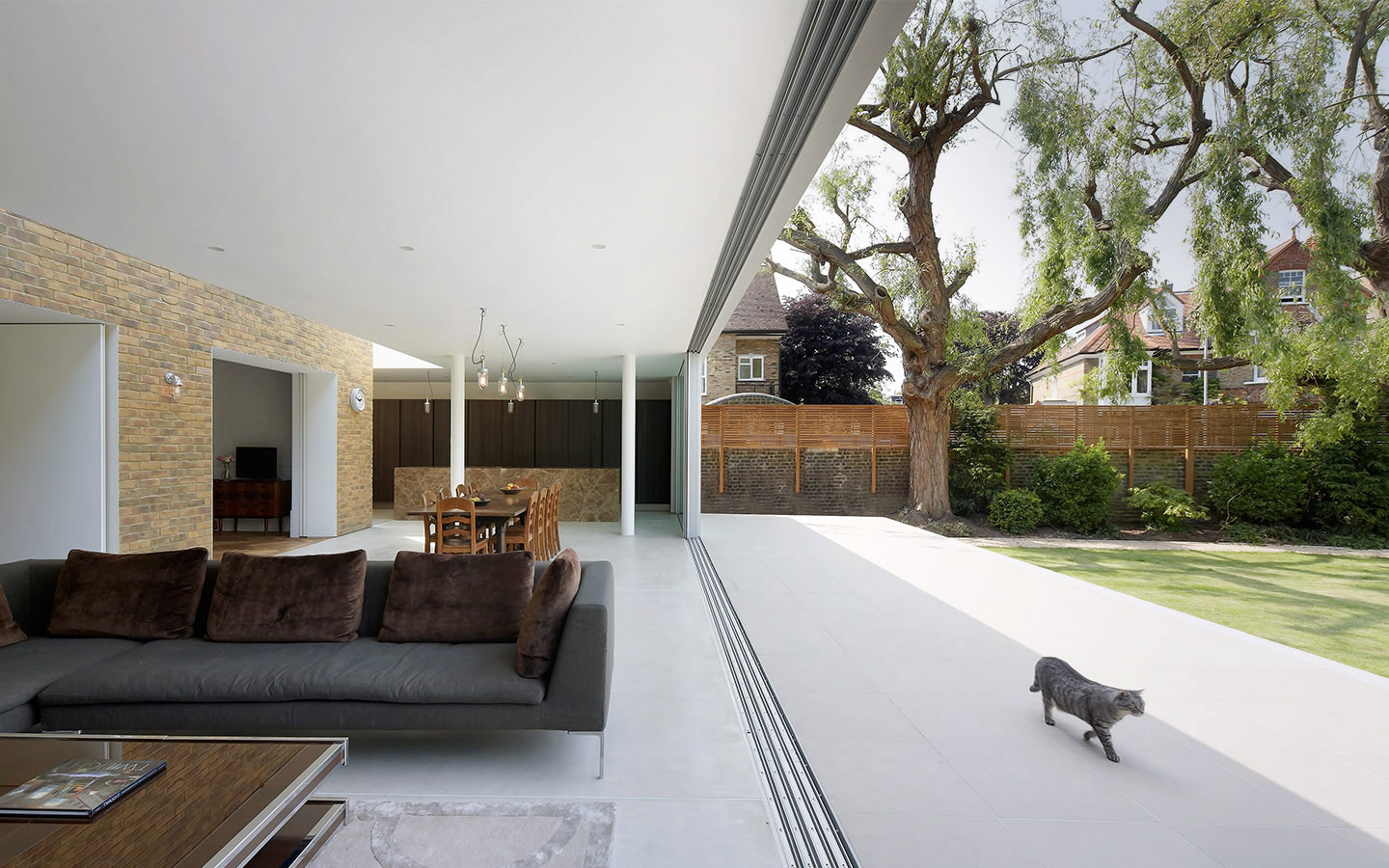
Template-led design promises speed and certainty. On paper, that can sound appealing. Standard layouts, familiar material packages, and repeatable planning strategies seem to reduce risk. Yet more London clients are beginning to see the limits of that approach. A city as layered and irregular as London rarely rewards design that starts with assumptions.
Homes here are too varied, planning contexts too nuanced, and lifestyles too specific for one-size-fits-all thinking. As expectations rise, clients are moving away from template-led design in favour of architecture that feels more responsive, more tailored, and ultimately more valuable.
London Properties Rarely Behave Like Standard Models
One reason template-led design struggles in London is that the housing stock is incredibly diverse. A Victorian terrace, a listed townhouse, a mews house, and a penthouse apartment all come with completely different constraints and opportunities. Even neighbouring properties can have very different access, light, structure, and planning considerations.
A template may save time at first, but it often misses the deeper logic of the site. That usually leads to a weaker result.
Common issues with template-led design include:
• Layouts that ignore how the property is actually used
• Solutions that fight the site rather than work with it
• Poor responses to light, privacy, and circulation
• Planning assumptions that do not fit the local authority context
Clients Want Homes That Reflect Real Life
Affluent homeowners are increasingly asking for more than a generic upgrade. They want a home that reflects how they live now and how they expect to live in the future. That may include flexible workspaces, better entertaining areas, integrated storage, improved wellness features, or stronger connections to outdoor space.
Template-led design tends to focus on the appearance of improvement. Bespoke design focuses on the lived experience of it.
This shift is driven by:
• More time spent working from home
• Higher expectations around comfort and flow
• Greater interest in longevity and adaptability
• A desire for homes with a stronger identity
Planning Conditions Demand More Nuance
London planning is not a standardised checklist. Borough expectations vary, and many properties sit within conservation areas or sensitive streetscapes. What works in one location may be inappropriate in another. Template-led schemes often struggle because they rely on predictable planning assumptions that do not hold up under closer scrutiny.
Clients are becoming more aware that better planning outcomes usually come from better contextual design, not from repeating what has worked elsewhere.
A more tailored planning approach helps with:
• Responding to local character
• Managing scale and massing carefully
• Strengthening design justification
• Reducing avoidable objections
Template-Led Design Often Hides Weak Space Planning
A project can look polished in visual terms while still functioning poorly. This is one of the biggest weaknesses of formula-based design. It can produce familiar-looking results without properly resolving storage, circulation, daylight, and privacy. Over time, those flaws become more important than the visual language.
London clients are increasingly prioritising quality of layout over surface-level gestures. They want homes that feel calm and intuitive, not just newly finished.
Clients now look more closely at:
• Whether rooms connect naturally
• How storage has been integrated
• Whether the home feels bright and spacious
• How private spaces are separated from busy ones
Long-Term Value Follows Individual Quality
In high-value property markets, individuality matters. Buyers respond to homes that feel resolved, coherent, and clearly well considered. Template-led design may create passable results, but it rarely creates memorable ones. In contrast, bespoke architecture often improves both everyday use and market perception.
That is why more clients are seeing design not as a cosmetic upgrade, but as a strategic investment.
Long-term value is often strengthened by:
• Better proportions and flow
• Stronger material quality
• More intelligent responses to the site
• Distinctive spaces that still feel timeless
Why The Shift Is Likely To Continue
As clients become more design-literate, they are less interested in generic solutions. They understand that premium results come from careful briefing, strong architectural judgement, and a design process that is specific to the property. In London, especially, that approach tends to produce more successful planning outcomes, better finished homes, and more durable value.
Why London clients are moving away from template-led design is ultimately a matter of fit. Standard solutions may look efficient, but they often miss the complexity that makes a home truly successful. A more bespoke approach produces architecture that responds better to site, planning, lifestyle, and long-term value, which is why it is becoming the preferred route for discerning homeowners.
For clients who want a design that feels tailored rather than formulaic, Found Associates creates homes shaped by context, clarity, and the realities of how people live in London today.
FAQs About Template-Led Design
- What Is Template-Led Design?
It is a design approach that relies on repeatable layouts, forms, or solutions instead of developing a project around its specific brief and site. - Why Does Template-Led Design Struggle In London?
Because London properties and planning contexts vary greatly, generic solutions often miss important site-specific issues. - Is Bespoke Design More Expensive?
Not always in the long term. It can lead to better planning outcomes, stronger layouts, and fewer costly compromises later.
4. What Do Clients Gain From A More Tailored Design Approach?
They usually get better functionality, more individuality, and a home that feels more resolved and valuable over time.