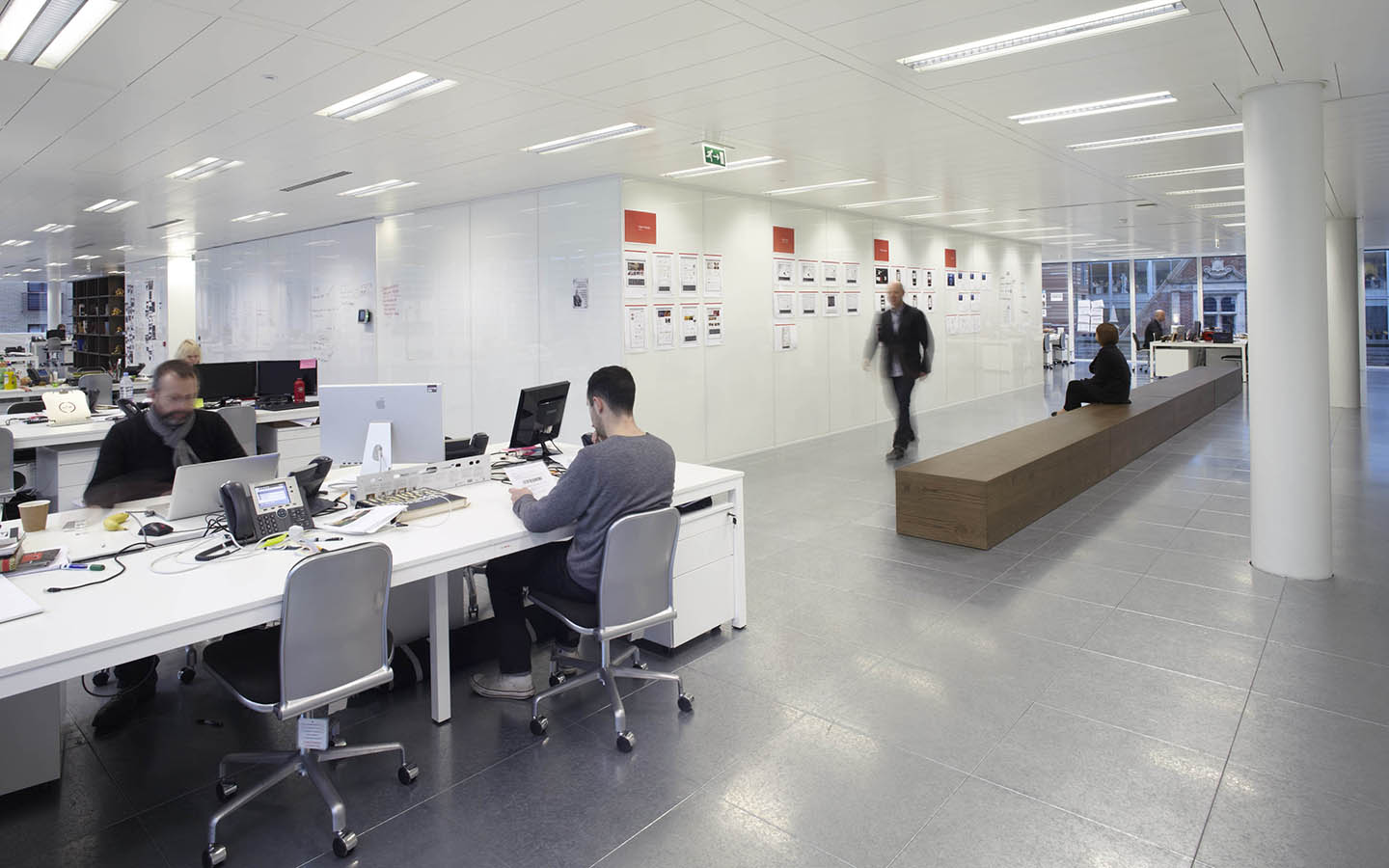
Designing a workspace that supports health and performance goes beyond aesthetics. Productive workspace design looks at how light, air, materials, and layouts affect people’s minds and bodies. Humans spend around 90% of their time indoors and roughly half of that at work. Therefore, every design decision has the potential to boost well-being and efficiency. This article explores the key ingredients of a productive and healthy office and how they can be integrated into high‑end architectural schemes.
Office Design for Well-being
When employees feel better, they work better. Thoughtful design can help boost well-being:
- Natural light and views – Polls show that daylight and glimpses of the outdoors are among the most desired workplace features. Exposure to daylight improves mood and regulates circadian rhythms, which supports alertness and performance. Large windows, clerestories or light wells capture sunlight while blinds or louvres control glare and heat.
- Biophilic elements – Incorporating plants, natural materials, and water features reduces stress and mental fatigue. Research suggests that spaces with greenery can deliver a 15% uplift in wellbeing and a 6% rise in productivity. Green walls, potted, plants, and timber finishes also help purify indoor air.
- Acoustic comfort and wellness spaces – Noise can drain concentration and reduce productivity by up to 40%. Soft furnishings, absorbent panels, and carpets dampen, sound while dedicated quiet rooms offer refuge for focused work. Wellness rooms and good air quality support physical health and can reduce the spread of seasonal illnesses.
Employee Productivity Through Design
Layouts influence how people interact and accomplish tasks. A productive workplace needs to support collaboration as well as concentration:
- Flexible layouts – Modular furniture, mobile partitions, and reconfigurable meeting rooms allow spaces to adapt to project needs. Breakout areas encourage spontaneous idea sharing, and teamwork walls and sliding panels can transform an open plan into private pods in minutes.
- Collaborative hubs – Central lounges and café‑style zones draw people together. Equipping these hubs with digital whiteboards and video conferencing fosters cross‑team collaboration, regardless of location. By situating them along circulation routes, designers encourage chance encounters and cross‑pollination of ideas.
- Quiet zones and choice – While open environments inspire connection, employees also need retreats for deep work. Phone booths, library rooms or even soundproof pods provide sanctuary from distraction. When workers can choose where to work based on the task at hand, morale and productivity both improve.
Ergonomic Office Design
Integrating ergonomics in office design from the outset and providing training ensures people feel supported, leading to fewer aches and higher job satisfaction.
- Adjustable desks and chairs – Sit‑stand desks encourage movement and reduce back pain, while chairs with lumbar support and adjustable heights reduce musculoskeletal strain. Quality upholstery and breathable fabrics add comfort.
- Screen and lighting positioning – Monitors should be at eye level and within arm’s reach to minimise neck and eye strain. Task lamps provide focused illumination, and blinds prevent glare from windows. Proper lighting reduces fatigue and supports alertness.
- Movement and break areas – Providing space for stretching, informal meetings, or quick breaks encourages regular movement. These zones can include soft seating, standing tables, or even simple equipment such as balance boards.
Sustainable Office Spaces
Sustainability enhances comfort and reduces running costs in office spaces. Key principles include:
- Energy efficiency – Insulating façades, high‑performance glazing, and intelligent control systems reduce heating and cooling loads. Sensors adjust lighting and ventilation based on occupancy and daylight, maintaining comfort with minimal energy use.
- Low‑emission and recycled materials – Selecting finishes with low volatile organic compounds improves air quality and health. Incorporating recycled or reclaimed materials reduces environmental impact and adds character.
- Passive design and natural ventilation – Operable windows, shading devices, and thermal mass provide fresh air and stable temperatures without relying solely on mechanical systems. When combined with shading, these features reduce energy consumption and connect occupants to their environment.
Partnering With Found Associates
A productive and healthy workplace arises from synergy between well-being, productivity, ergonomics, and sustainability. Studies show that access to natural light and views, biophilic elements, and ergonomic furniture can significantly improve well-being and productivity.
Found Associates specialises in tailoring productive workspace design to the culture and aspirations of each client. Our architects and interior designers combine evidence‑based insight with refined architectural sensibility to create offices that support success. Contact us to discover how we can transform your office into a thriving hub of well-being and performance.
FAQs Related to Creating Productive Workspace Designs
Q1. How does office design impact employee well-being?
Office design that prioritises natural light, biophilic elements, and acoustic comfort can reduce stress, improve mood, and enhance productivity.
Q2. What are the benefits of biophilic design in offices?
Incorporating plants, natural materials, and water features into office spaces can increase employee well-being by 15% and productivity by 6%.
Q3. How can office layouts improve employee productivity?
Flexible layouts, collaborative hubs, and quiet zones allow employees to choose their workspace based on the task at hand, fostering both collaboration and focus.
Q4. What ergonomic features should be included in office design?
Adjustable desks, lumbar-support chairs, proper screen placement, and good lighting prevent strain and discomfort, boosting employee satisfaction and productivity.
Q5. How can sustainable office design reduce costs?
Energy-efficient design, low-emission materials, and passive features like natural ventilation reduce energy consumption, improve comfort, and lower running costs.